Rehab is more than getting someone back to where they were before an injury. Done well, rehab can actually build better movers, stronger joints, and smarter athletes. The tools we use matter, and portable cold therapy units give us a simple way to turn recovery time into performance gains.
As activity ramps up with summer sports camps, off-season strength blocks, and long training days in the heat, injuries and overuse issues tend to rise. In this article, we will walk through how portable cold therapy units fit into modern rehab, how to plan protocols around them, and how to track the impact on pain, swelling, and performance.
Turning Rehab Time Into Performance Gains
When someone is hurt, they often think, "I just want to get back to normal." We like to flip that idea. Rehab is a chance to come back smarter, more resilient, and better prepared for the next season.
Portable cold therapy units help here because they bring pro-style recovery tools into:
- Outpatient clinics
- Athletic training rooms
- At-home settings for serious users
Instead of a few random ice sessions, we can build structured recovery plans that follow the same standard from table to turf to living room couch. That consistency is what turns dead time after practice or surgery into true performance work.
Why Traditional Rehab Needs a Cold Therapy Upgrade
Traditional icing has some clear limits. People forget to ice, do it for too long, or stop the routine as soon as pain eases. Bags of ice melt, leak, and change temperature from minute to minute. At home, many patients just give up.
Targeted cold therapy, done well, can help with:
- Managing pain between sessions
- Controlling early swelling
- Limiting stress on surrounding tissues
The problem is not cold itself; it is the lack of control. A bag of frozen peas is passive and messy. Modern portable units keep the temperature consistent for a set time and often pair cold with gentle compression. That gives clinicians actual parameters to prescribe, not just "ice a bit when you get home."
At the same time, patients and athletes now see what the pros use online. They expect better tools than a dripping plastic bag. Clinics and programs that modernize cold therapy can match those expectations and build more trust in the plan.
How Portable Cold Therapy Units Transform Protocol Design
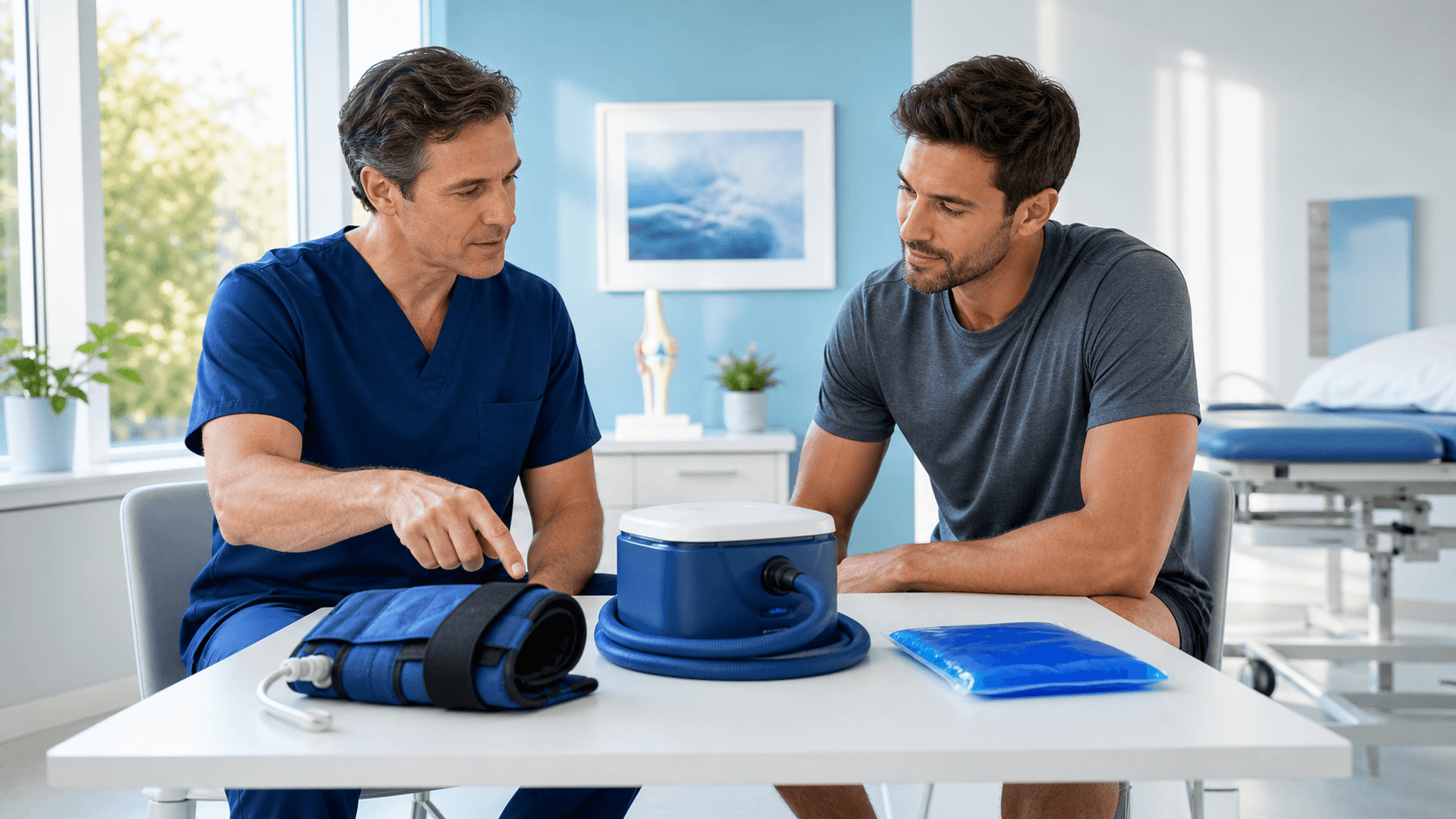
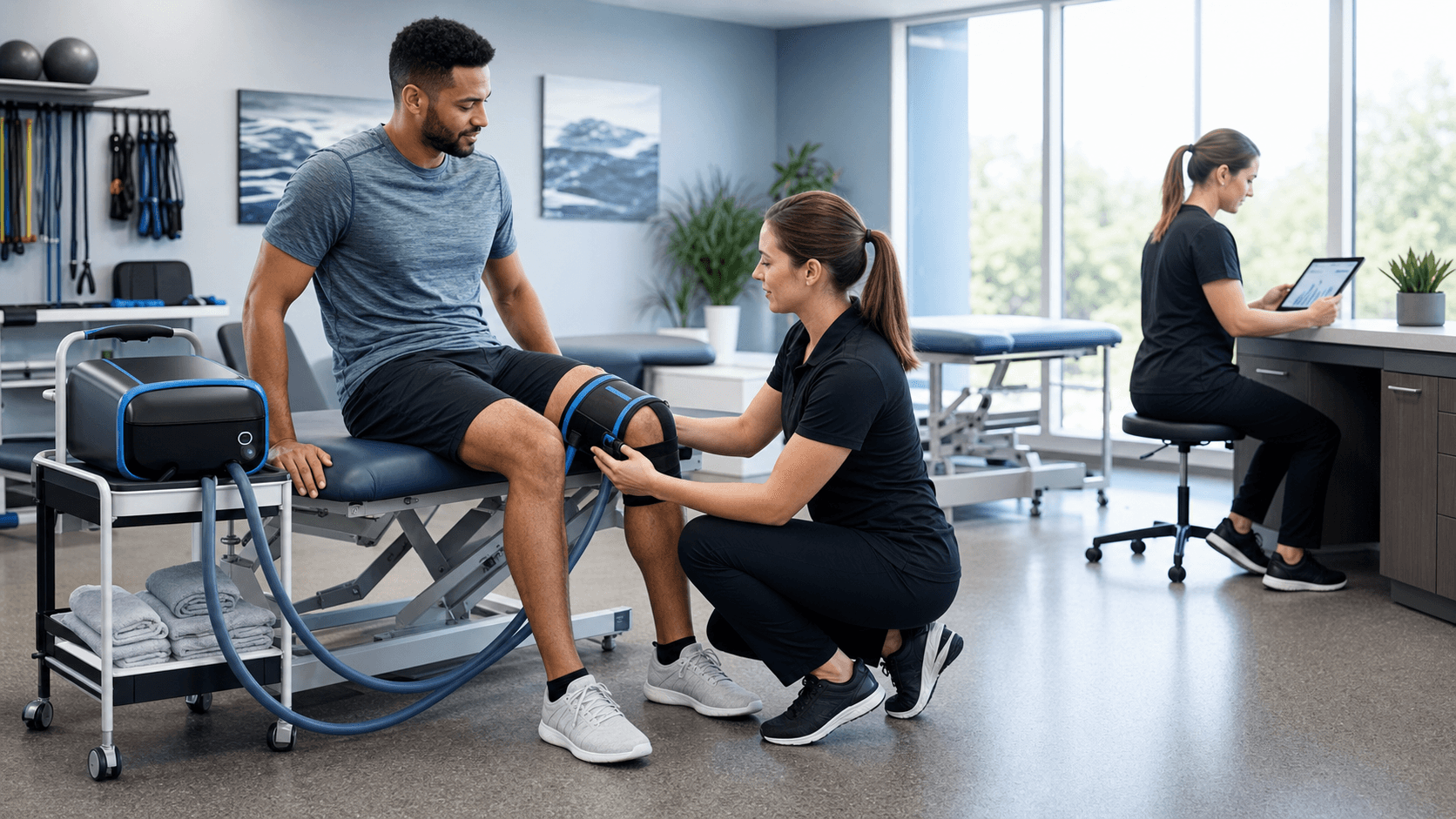
Portable cold therapy units are compact, powered systems that circulate chilled fluid through a wrap or pad. Many also add light compression. The key is control: we can choose the temperature range and the treatment duration instead of guessing.
That control lets us:
- Standardize protocols after rehab sessions
- Repeat the same settings across many patients or athletes
- Adjust based on injury type, surgery, or training load
For acute and post-surgical care, these units can support pain control, which may reduce the need for some medications and help patients tolerate early movement, like gentle range-of-motion work. For athletes in higher-load phases, cold therapy after intense training may make it easier to stick to the next day's plan.
Portability is a big deal too. Instead of recovery stopping when the person leaves the clinic or training room, they can continue evidence-based cold therapy at home or on the road. That keeps the rehab story the same from start to finish.
Integrating Cold Therapy Into Evidence-Based Rehab Plans
We like to think of portable cold therapy within the main phases of healing:
- Acute phase: focus on comfort and swelling control
- Subacute phase: support movement and light loading
- Remodeling phase: manage flare-ups as training ramps up
Right after surgery or a big injury, cold therapy sessions are often planned around the first days of pain and swelling. Later, we might pair cold therapy with key milestones, like:
- Higher-load strength days
- On-field agility and cutting sessions
- Summer two-a-day practices or long scrimmages
- Return-to-play test days
When setting parameters, we look at duration, frequency, and temperature range, and we stay mindful of skin checks and any contraindications. Cold therapy should be spaced well with other modalities, such as heat or certain manual treatments, so they do not work against each other.
Clear communication matters. When clinicians and athletic staff explain the "why" in simple language, athletes and patients are more likely to follow the plan. Shared messaging across the team keeps the expectations consistent, from surgeon to therapist to strength coach.
Boosting Adherence Through Smart at-Home Protocols
The best rehab plan only works if people actually follow it. Portable cold therapy units help reduce friction at home. There is no race to refill ice bags, no guessing if the pack is too warm or too cold, and the setup can fit into real life, including busy summer schedules and travel.
We can treat cold therapy like exercise and prescribe it clearly:
- Written protocols with simple time and frequency goals
- App-based or phone-based reminders to use the device after key sessions
- Routine slots, such as after practice, after work, or before bed
Comfort plays a quiet but powerful role. Quieter units, wraps that contour to knees, shoulders, or ankles, and simple controls make it much more likely that someone will keep using the device without frustration.
When adherence improves, outcomes tend to become more predictable. Less swelling, more steady pain scores, and fewer skipped rehab sessions make it easier to progress strength, balance, and movement skills as planned.
Measuring Performance and Recovery Outcomes with Cold
To know if portable cold therapy units are helping, we need to measure what matters. Some useful metrics for clinics and athletic programs include:
- Pain ratings before and after sessions
- Circumference or other swelling measures
- Range-of-motion milestones
- Time to reach key functional benchmarks
Across a summer or pre-season block, staff can also track return-to-practice timelines, training loads that athletes can handle, and how often flare-ups or setbacks occur. Simple tools work well, such as shared rehab logs, athlete self-report apps, and short post-session questionnaires.
When cold therapy helps keep pain and swelling manageable, people often stay more consistent with the hard work of rehab. That consistency can lead to faster return to regular work or play, fewer missed practices, and performance that holds up better once the season hits full speed.
Upgrading Your Rehab Toolkit for the Next Season
This is a good time to step back and look honestly at how cold therapy is used in your setting. Are you relying on random ice packs and hoping for the best, or do you have a consistent, controlled plan that patients and athletes can follow anywhere?
A simple approach is to start small, then grow:
- Pilot portable cold therapy units with a focused group, such as post-op patients or high-risk athletes
- Collect feedback and outcome data, and refine protocols
- Expand use as you see patterns in recovery and performance
At ORX Healthcare, we design advanced temperature-therapy and compression systems for clinicians, athletic programs, and serious at-home users who want that pro-level structure without pro-level hassle. Updating cold therapy protocols now helps set your athletes, patients, and teams to handle the demands of late summer and fall with more control, more confidence, and a clearer plan for performance-focused rehab.
Support Better Recovery With Proven Cold Therapy Solutions
If your team is ready to simplify post-op care and improve patient comfort, we can help you choose the right portable cold therapy units for your clinical needs. At ORX Healthcare, we work directly with providers to align therapy options with existing workflows and protocols. Share a few details about your facility and goals, and we will recommend a tailored solution. To start the conversation, simply contact us.