Elevating Post-Op Outcomes with Smarter Cold Therapy
Cold therapy after surgery should not be guesswork. For many teams, the default is still a bag of ice, some towels, and a reminder to elevate. That can help, but it does not give much control, especially for higher-risk patients or complex procedures. When pain, swelling, and early motion all matter, the details of how we cool the tissue really count.
A simple, repeatable decision framework can make life easier for surgeons, physical therapists, athletic trainers, and nursing staff. By tying cold therapy choices to procedure type, incision location, and patient risk factors, we can bring more consistency to care and help reduce avoidable problems like skin injury or nerve irritation. As fall surgery schedules fill up and sports programs ramp back into full contact, having a clear, shared plan for medical-grade cold therapy supports smoother returns to work, school, and sport.
At ORX Healthcare, we focus on performance-minded recovery, so this topic is close to home for us. Advanced, portable, medical-grade systems are designed to give clinicians more control over temperature, compression, and timing. The framework below is not about selling devices; it is about giving structure to a decision most teams are already making every day.
Core Principles of Safe and Effective Cold Therapy
The goals of post-op cold therapy are simple to say, but easy to miss in practice. We are aiming for three things: pain modulation, edema control, and protection of stressed tissues during the early inflammatory phase. Colder is not always better. The right temperature is cold enough to slow nerve signaling and fluid buildup, but not so cold that it threatens skin or nerve health.
A few safety rules should guide every plan:
- Stay in a therapeutic temperature range that cools, but does not freeze
- Limit continuous sessions and build in off-time for skin recovery
- Always use a barrier layer and frequent skin checks
- Adjust more cautiously over areas with thin soft tissue or nerve branches
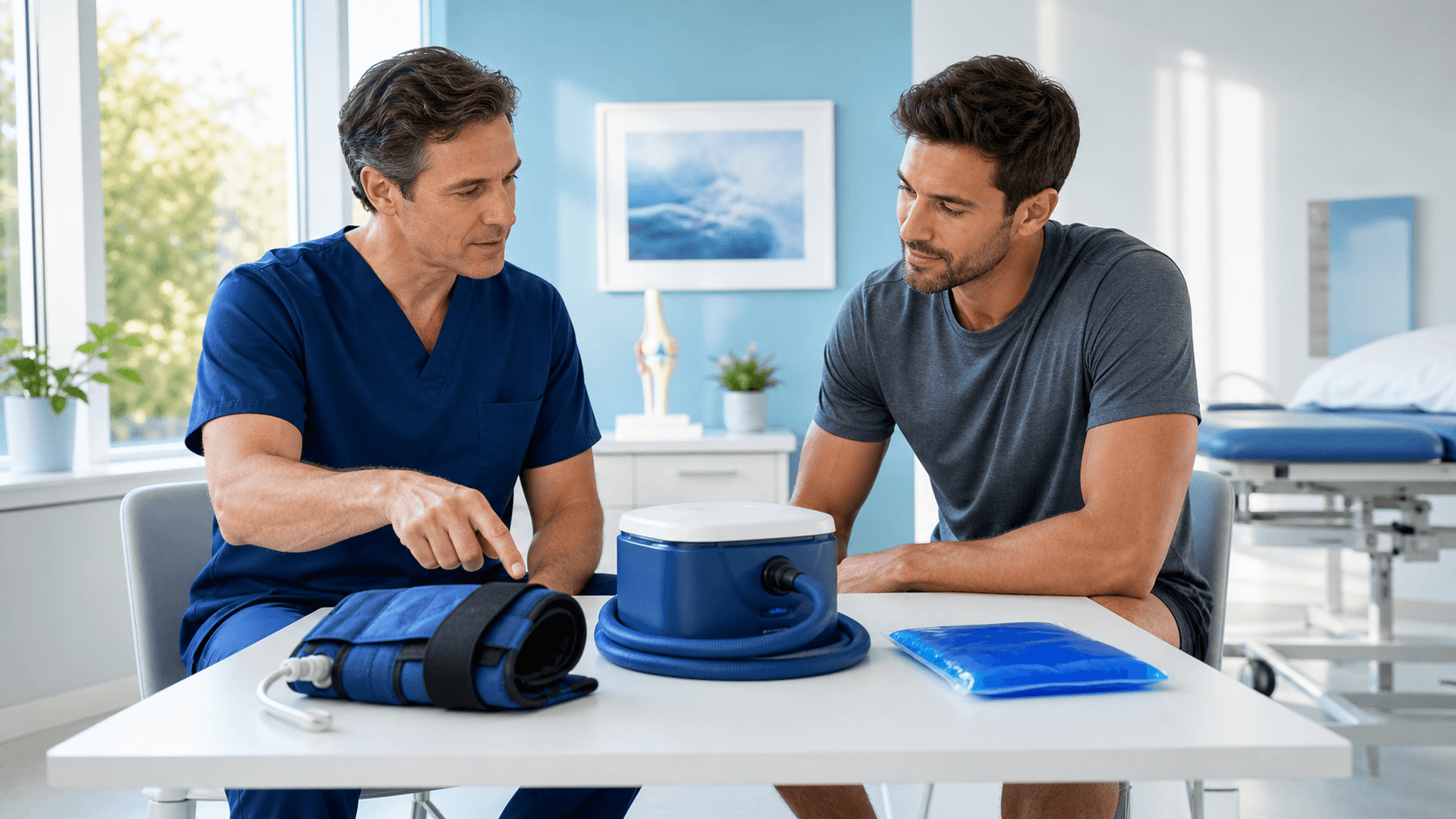
Basic ice packs can help for simple cases, but they have real limits. The temperature is not consistent, the shape rarely matches complex joints, and there is no built-in way to pair cooling with controlled compression. Medical-grade cold therapy systems can support:
- More stable temperature over time
- Adjustable compression to help manage swelling
- Better anatomic fit around shoulders, knees, and ankles
- Clear dosing protocols that teams can document and repeat
Clinical workflow matters too. A modality that is hard to set up in PACU or confusing for families at home will not be used correctly. When we think about cold therapy, we should also plan for:
- Fast setup in PACU and inpatient rooms
- Simple controls for outpatient surgery centers
- Clear written and verbal education for home use
- Short, repeatable documentation steps in the chart
Matching Modality to Procedure Type and Tissue Depth
Not every procedure needs the same level of control. One helpful way to think about this is by classifying how much tissue disruption is involved and how deep the main pain source is.
For a quick mental matrix:
- High tissue trauma, such as total knee, rotator cuff repair, or multiligament knee surgery, often benefits from continuous-flow or advanced wrap systems with adjustable temperature and compression.
- Moderate trauma, such as ACL reconstruction or shoulder arthroscopy with multiple anchors, may be well served by intermittent medical-grade cold therapy with flexible cuffs.
- Low trauma or minor procedures, like simple arthroscopy or small soft-tissue excisions, may do fine with well-fitted, passive packs used with strict time limits and good teaching.
Depth matters. Deeper joints and higher-bleed procedures typically respond better to longer-duration cooling that can reach deeper structures. Adding compression can support venous return and help limit joint effusion, which in turn can support earlier, safer motion.
In fall, when ligament and cartilage procedures spike with school, college, and pro sports, teams often push for more aggressive rehab plans. For that group, medical-grade cold therapy with reliable compression can be a useful tool to support consistent edema control session after session.
Adapting to Incision Location and Regional Anatomy
The body region and incision layout should always shape the plan. Extremity joints like knees, ankles, and shoulders usually handle circumferential wraps and compression well, as long as pressure is even and monitored. Core areas, such as the neck, lumbar spine, or abdomen, may require gentler, more targeted cooling with less compression and more frequent checks.
Nerve-dense regions need thoughtful settings. Examples include:
- Peroneal nerve around the fibular head
- Ulnar nerve at the elbow
- Superficial radial nerve at the wrist
- Peroneal and saphenous branches around the knee
Over these spots, many teams choose slightly warmer settings, lower compression, and shorter application times with more frequent skin and sensation checks.
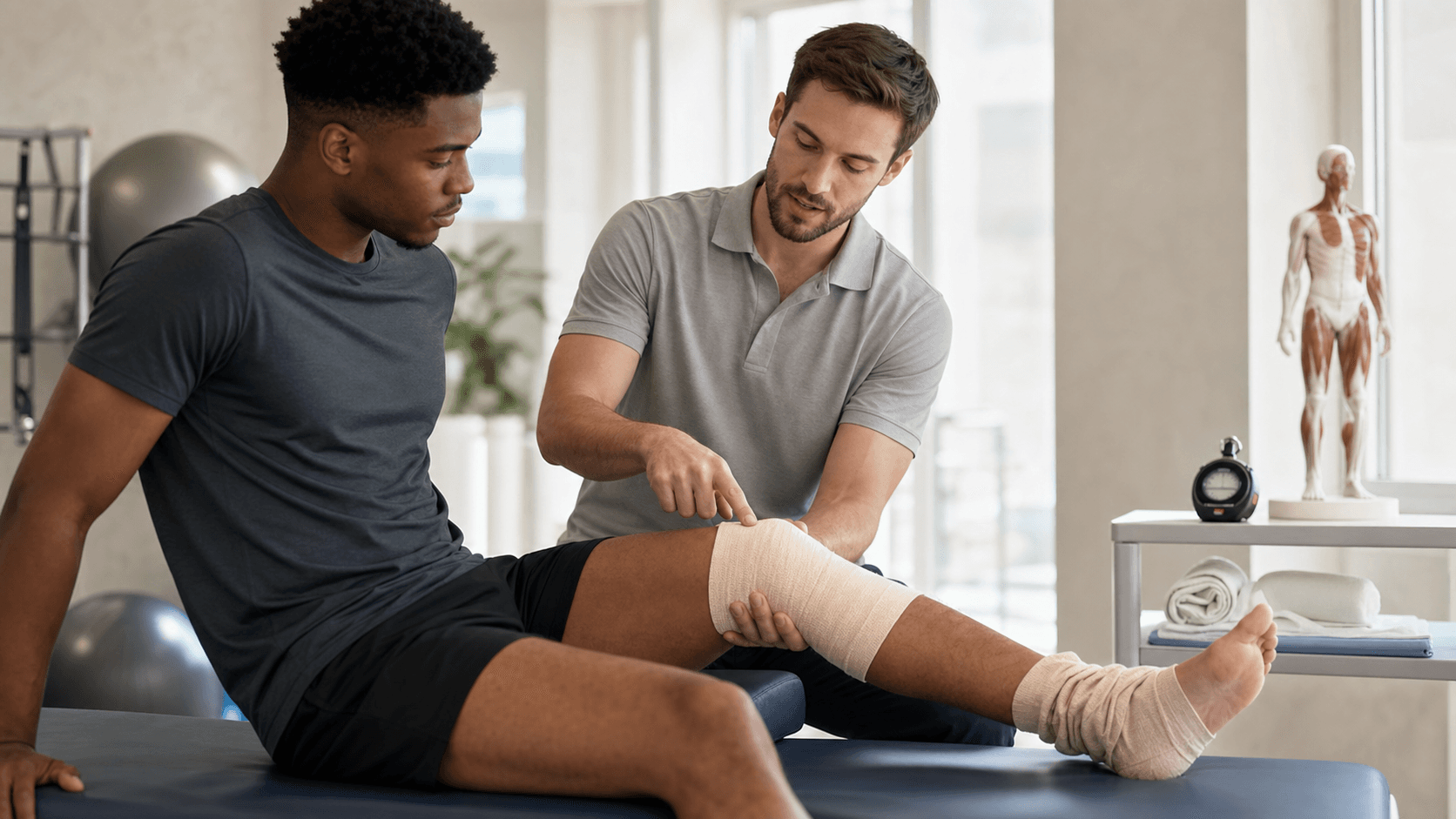
Bony prominences and areas with limited soft-tissue coverage, like the elbow, ankle, clavicle, and patella, are at higher risk for pressure injury and cold-related skin damage. Here, even pressure distribution is key. Soft, well-shaped wraps with precise temperature control are often safer than rigid, hard ice packs.
Incision orientation and dressings also matter. Vertical versus transverse cuts, bulky dressings, and the presence of drains all change how a wrap should be placed. It is important to:
- Avoid kinking tubing or lines
- Prevent direct compression on drains or known nerve paths
- Maintain good contact so cooling is even but not excessive
Integrating Patient Risk Factors Into Modality Choice
The same device and settings are not right for every patient. Risk factors should shift the plan.
For nerve sensitivity and neuropathy, such as diabetic neuropathy, prior nerve injury, radiculopathy, or complex regional pain syndrome, conservative dosing makes sense. That often means:
- Slightly higher temperature
- Shorter sessions with longer breaks
- More frequent checks of sensation and motor function
In these cases, medical-grade cold therapy can support safer care because the temperature is more predictable.
Skin integrity and vascular status are just as important. Older adults, people with fragile skin, peripheral artery disease, autoimmune skin problems, or a history of pressure injuries may need:
- Softer interface materials
- Reduced compression levels
- Strict time-outs from cooling to let skin rewarm
Patients on anticoagulants like warfarin, DOACs, or antiplatelet agents, or with clotting disorders, are at higher risk for post-op bleeding and joint effusion. Controlled cold plus adjustable compression may help manage swelling and bleeding, but only when combined with regular neurovascular checks.
Obesity, smoking, and metabolic disease can all affect microcirculation and the way tissues cool. For these patients, controlled, sustained medical-grade cold therapy can support edema management while helping avoid overcooling superficial tissues that already have a slower healing environment.
Building a Practical Decision Framework for Daily Use
To make all of this usable, teams need a simple path they can run through in real time. One approach is:
- Step 1: Classify the procedure as high, moderate, or low tissue disruption.
- Step 2: Map incision location and nearby nerve-dense areas or bony points.
- Step 3: Screen core risks like neuropathy, skin integrity, coagulation, vascular status, and age.
- Step 4: Select the cold therapy modality and define the specific protocol, including temperature range, duration, frequency, compression level, and monitoring plan.
Standardized order sets and rehab protocols can embed this flow while still leaving room for surgeon and PT preferences. Athletic trainers can mirror the same steps with their post-op and post-injury plans, especially as fall sports schedules crowd family calendars and recovery time gets squeezed.
Education holds it all together. When surgeons, PTs, nurses, athletic trainers, and patients all speak the same language about temperature targets, how long to use the device, and warning signs to watch for, adherence tends to improve. Teams can then review outcomes like pain scores, opioid use, swelling, and unplanned calls or visits as they move from generic ice to more precise systems.
At ORX Healthcare, our focus is to support that kind of structured, performance-focused decision making with medical-grade cold therapy and compression tools that fit into real clinical workflows, from the OR and PACU to training rooms and living rooms.
Experience Targeted Relief With Proven Cold Therapy Solutions
If you are ready to make recovery more comfortable and consistent, explore our medical-grade cold therapy options designed for real clinical results. At ORX Healthcare, we focus on products that are simple to use, effective, and built to support your healing journey. Have questions about which solution is right for you or your patients? Just contact us and we will help you choose the best fit.