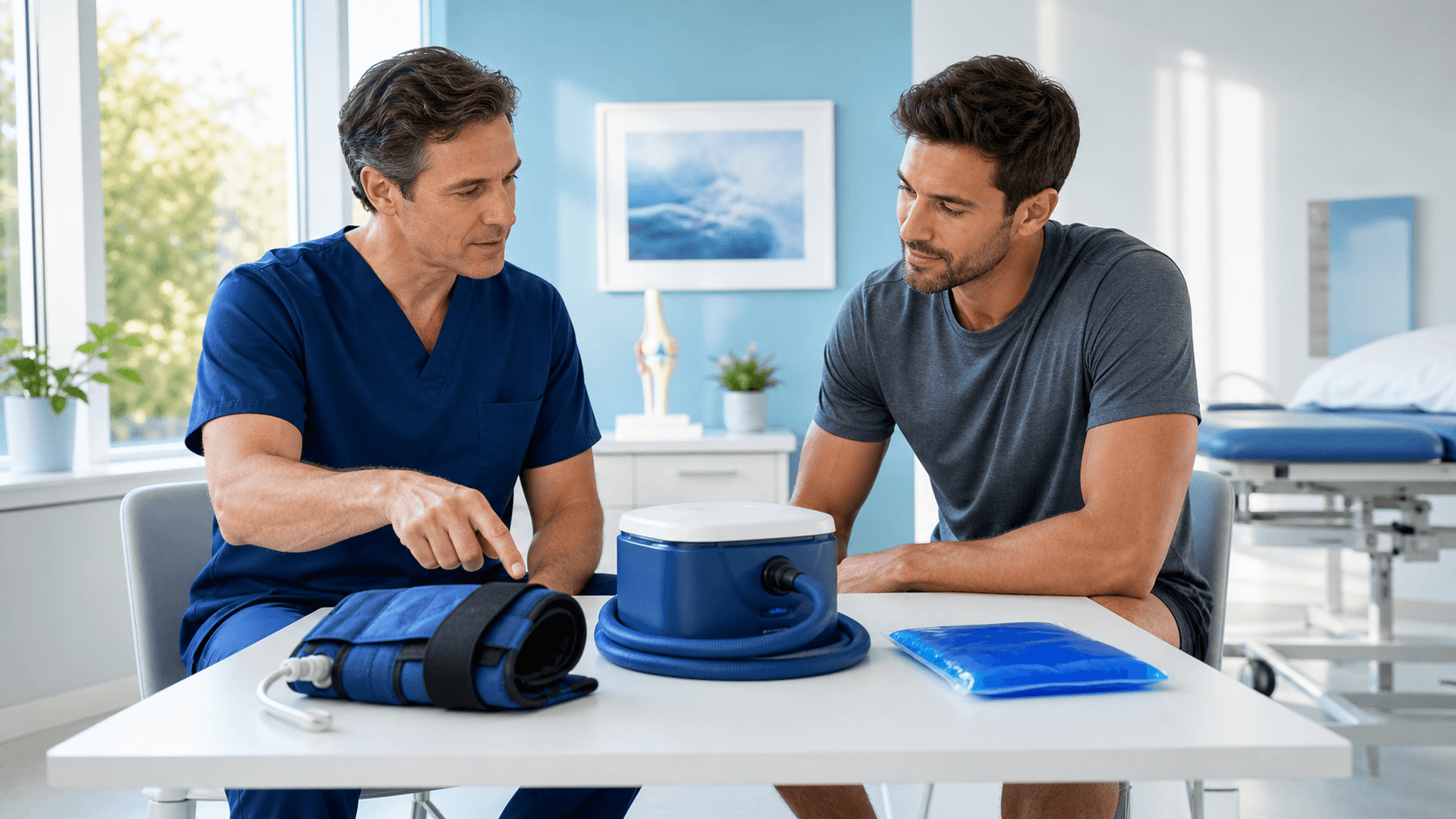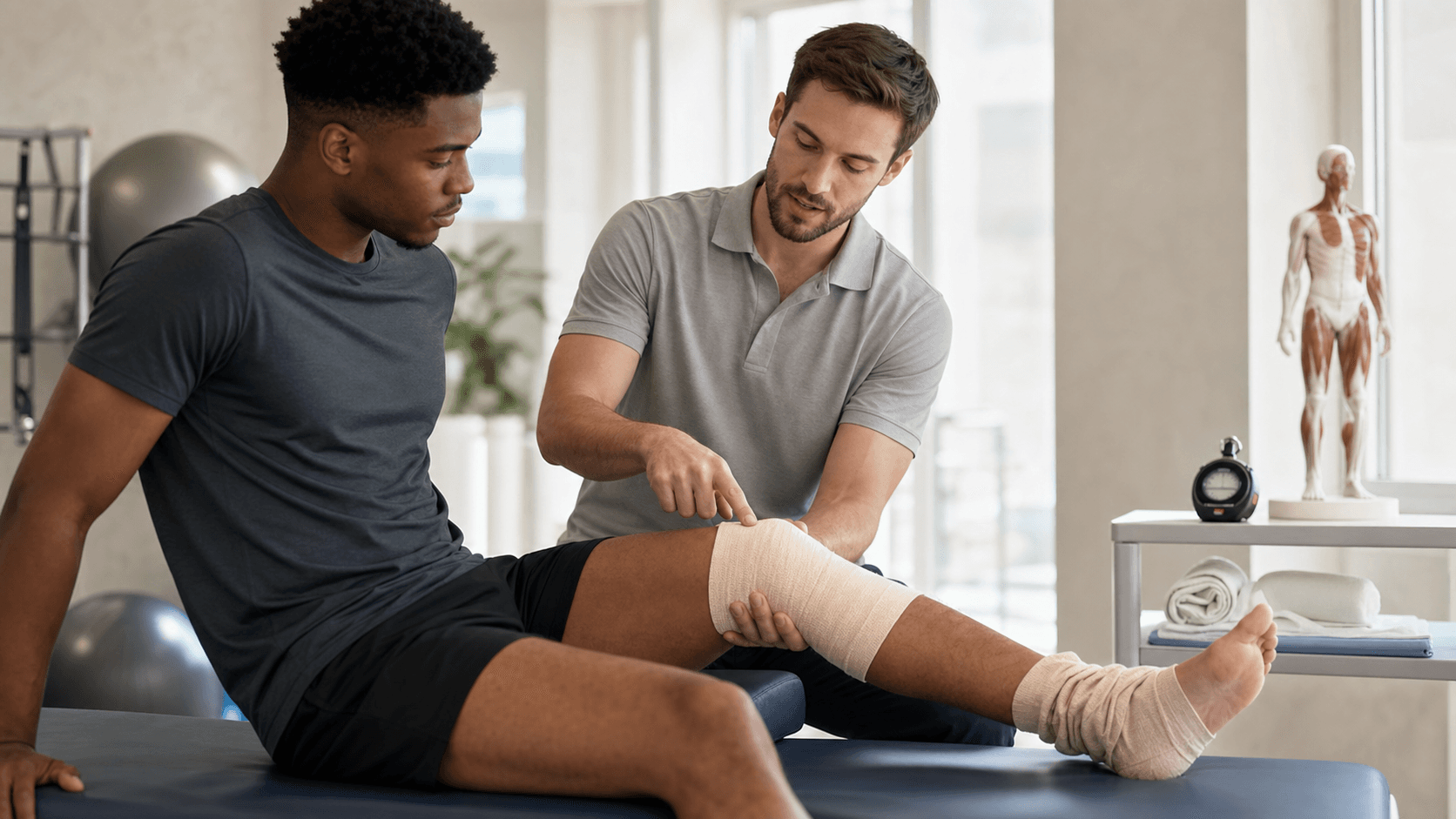
Peak summer training and playoff pushes can be brutal on athletes. When the weather gets hot and the workload ramps up, soft tissue injuries, sore joints, and lingering swelling tend to pile up fast. That is when compression therapy for sports injuries usually gets pulled out more often, sometimes without much thought about how or why it is being used.
We see it all the time, from busy clinics to packed athletic training rooms. Compression becomes the default move: wrap the limb, plug in the pump, and hope it helps. But when compression is used with clear purpose and strategy, it can support faster, safer return to play. When it is not, it can waste time or even slow progress. In this article, we will walk through common mistakes we see and how to clean them up so compression becomes a targeted performance tool instead of a guess.
Stop Guessing and Use Compression with Purpose
Compression therapy is more than "putting pressure on a swollen area." In sports rehab, it is a planned way of applying controlled pressure to help manage swelling, support tissues, and support circulation around injured or overworked areas. It shows up in clinics, college training rooms, and pro facilities because it fits well with modern recovery plans.
The problem is not that people skip compression; it is that they:
- Use the same setup for every injury
- Apply it whenever there is a free moment
- Ignore temperature pairing
- Hand devices to athletes without clear teaching
At ORX Healthcare, we focus on science-backed temperature and compression systems for clinicians, athletic trainers, and serious athletes. We care about helping you move from "just wrapping it" to dialed-in, phase-specific plans. Next, we will break down where compression goes wrong and how to use it with real purpose.
Mistake 1: Treating Every Injury the Same Way
Not every injury should feel the same under compression. A tight wrap that feels good on a mild ankle sprain may feel awful on a deep quad contusion or a fresh post-op knee. Different tissues and phases call for different pressure profiles.
Think about how these can differ:
- Muscle strains usually do better with moderate, comfortable pressure that supports circulation without sharp pain.
- Ligament sprains and joint effusion often need more structured support and controlled gradients to help manage fluid.
- Post-op joints often require very controlled, lower-intensity settings early on to avoid extra discomfort.
In the acute phase, right after injury or surgery, the body is already stressed. Aggressive compression can crank up pain or trap fluid in the wrong place. Later, in the subacute and return-to-play phases, more dynamic or intermittent compression may fit better as athletes move more and swelling patterns change.
Common problems we see:
- Using the same tight wrap on a fresh contusion that you use on a stable ankle, which can increase soreness.
- Giving very light, loose pressure to a knee with clear joint effusion, which may do almost nothing.
Advanced systems give you pressure customization and gradient control instead of "on or off." That kind of control supports individualized care rather than the same setup for everyone.
A simple checklist before you set pressure:
- What tissue is injured: muscle, ligament, tendon, joint, or post-op site?
- How much swelling is present, and where is it pooling?
- What is the current pain level at rest and with movement?
- Who is in front of you: a youth athlete, a weekend warrior, or an elite pro with dense training volume?
Starting with those answers helps you match compression to the actual problem, not to habit.
Mistake 2: Ignoring Timing, Frequency, and Load
Compression therapy for sports injuries is not just about "how much"; it is also about "when" and "how often." Slapping on a device whenever the schedule opens up ignores how the body responds to training load and injury over the day.
Right after an injury or surgery, especially during summer training when heat and humidity can build, shorter and more frequent sessions often make sense. The first couple of days are usually about comfort and controlling swelling while you protect the area. As time passes and athletes load the limb more, compression can shift toward supporting recovery around practices, lifts, and games.
Some common timing missteps:
- Leaving high compression on for long blocks without checking in, especially when an athlete is lying in a hot room.
- Applying strong compression right after intense heat exposure, like turf practice in direct sun, without giving the body a short cool-down period.
- Waiting many hours after training, when the main inflammatory response has already kicked in, instead of pairing compression closer to the end of the session.
Think of timing in three simple buckets:
- Pre-practice or pre-game: short, light sessions focused on comfort and gentle priming.
- Post-practice or post-game: longer, carefully monitored sessions, often combined with cooling.
- Tournament or back-to-back competition schedules: planned cycles across the day, not random, last-minute use.
Devices with programmable cycles and precise timers help keep you honest, so compression lines up with the training plan instead of working against it.
Mistake 3: Overlooking Temperature and Compression Synergy
Compression by itself can help, but in many sports rehab settings, it should not stand alone. When you pair controlled temperature with compression, you can shape the response more clearly and often more safely.
The general idea is simple:
- Early after injury, cool plus compression can help manage swelling and ease pain so athletes can tolerate basic movement and sleep better.
- Later on, controlled warmth plus compression before mobility or strength work can help tissues feel looser and more ready to move.
A mistake we see often is stacking random ice packs under tight elastic wraps or throwing a general heating pad under heavy pressure. That can create hot or cold spots, uneven contact, and skin risk, especially if the athlete is not checked regularly.
Integrated systems that bring temperature and compression together in one device make it easier to:
- Keep even contact across the limb or joint.
- Control temperature and pressure together instead of guessing.
- Adjust dose gently between phases of rehab.
Think about a summer ACL reconstruction, where the knee needs frequent, controlled cool plus compression early on, then more flexible settings as quadriceps strength returns. Or a midseason hamstring strain that responds well to gentle cooling with light pressure in the early days, then later to warm, comfortable compression before stretching. For chronic ankle swelling during long tournament weekends, consistent temperature plus smart compression cycles can support recovery between games without adding more stress.
Mistake 4: Skipping Athlete Education and Monitoring
Even the best compression setup can go wrong if the athlete using it does not understand what "right" feels like. The biggest risk is the "set it and forget it" mindset, especially with easy-to-use sleeves or portable devices.
Athletes need clear, simple teaching before they use compression on their own:
- How should it feel: snug and supported, not sharp or throbbing.
- What are red flags: new numbness, tingling, burning, unusual color changes, or sudden spikes in pain.
- When to stop a session and tell a clinician or athletic trainer.
- Why more pressure is not always better, especially in hot environments.
Monitoring is just as important as teaching. That can include:
- Tracking limb size or girth over time instead of guessing about swelling.
- Asking for quick pain scores before and after sessions.
- Watching for changes in joint motion and how the athlete feels during sport tasks.
Special groups, like youth athletes, anyone with known circulation problems, or those training in extreme heat, may need tighter guardrails. Data-capable devices and clear presets support this, giving staff more control while still allowing athletes some independence during busy seasons.
Turn Compression Into a Competitive Edge This Season
If there is one mindset shift we hope you carry into late summer and pre-season, it is this: compression therapy for sports injuries is not about doing "something" to an injured area; it is about giving the right dose at the right time for the right athlete. That means individual settings, thoughtful timing, smart pairing with temperature, and real education.
Take a moment to look at how you are using compression now. Are you running the same pressure for every injury? Are sessions random or tied to training load and game schedules? Do you pair cold or heat in a clear way, or just add whatever is handy? Do athletes understand what safe use feels like?
At ORX Healthcare, we design advanced temperature and compression systems to give clinicians, athletic trainers, and serious athletes more control over all of this. When compression is guided by science and delivered with purpose, it can help athletes head into the season healthier, more resilient, and ready to perform.
Accelerate Your Recovery With Targeted Compression Solutions
If you are ready to shorten downtime and protect your long-term performance, we can help you build a recovery plan around advanced compression therapy for sports injuries. At ORX Healthcare, our team works with you to match the right solutions to your sport, training load, and injury history so you can return to play with confidence. Reach out today through our contact us page and we will walk you through the next steps to get started.