Match Therapy to the Moment for Faster, Safer Recovery
Choosing between cold, heat, and contrast sounds simple, but it often gets messy in the real world. Ice goes on everything, heat gets thrown at any tight spot, and contrast is treated like a magic trick. When that happens, healing can slow down and athletes lose days or weeks that they did not need to lose.
At ORX Healthcare, we look at temperature therapy as a tool that must match the moment. The right choice depends on three big things: what kind of injury you are dealing with, what tissue is involved, and where you are in the recovery phase. When those pieces line up, recovery tends to be smoother, safer, and more predictable.
Sports medicine recovery devices today let us be much more specific. Instead of guessing with a bag of melting ice or a hot towel, we can dial in temperature, time, and compression in a precise way. That matters most during hot summer tournaments, preseason camps, and long training blocks when workloads climb and bodies get stressed.
Understanding Cold, Heat, and Contrast
Cold, heat, and contrast are not just about what feels good. They change how tissue and blood vessels behave.
Cold therapy can help with:
- Vasoconstriction, which means blood vessels narrow
- Slowing nerve signals, which can reduce pain
- Limiting extra swelling in the early phase after injury
- Calming an area so it is easier to rest and protect
Heat therapy can help with:
- Vasodilation, or widening of blood vessels
- Softer, more flexible tissue that moves more easily
- A sense of relaxation in tight muscles
- Support for later-stage recovery work like stretching and strengthening
Contrast therapy, switching between hot and cold, is often used to:
- Alternate vasoconstriction and vasodilation
- Support circulation during tough training periods
- Help athletes feel lighter and more ready between sessions
It is important to separate short-term symptom relief from long-term tissue healing. Any modality, when used too long or at the wrong time, can slow progress. For example, very aggressive ice long after the acute phase, or very high heat on fresh swelling, can work against the body instead of with it.
Modern sports medicine recovery devices help control the variables that matter most: target temperature, how long the treatment lasts, and whether compression is added. That level of consistency is hard to get with plastic bags, hot packs from the microwave, or simple whirlpools.
Cold Therapy for Acute Sports Injuries
The acute phase usually runs through the first few days after an injury or surgery. Sprains, strains, contusions, or post-op pain often hit hardest during that window. The main goals are simple: control pain, limit too much swelling, and protect the injured tissue as it starts to respond.
Cold therapy is usually a better choice early on for:
- Ligament sprains and joint injuries after practice or games, like ankles, knees, or shoulders
- Muscle contusions and fresh strains, especially when there is clear swelling or bruising
- Post-surgical recovery, when a surgeon or sports medicine team has written a cold and compression plan
Common cold therapy guidelines often focus on:
- Short, controlled sessions instead of leaving ice on for long periods
- Enough time between sessions for the skin to return to a normal temperature
- Careful skin checks, especially around bony areas or where sensation is reduced
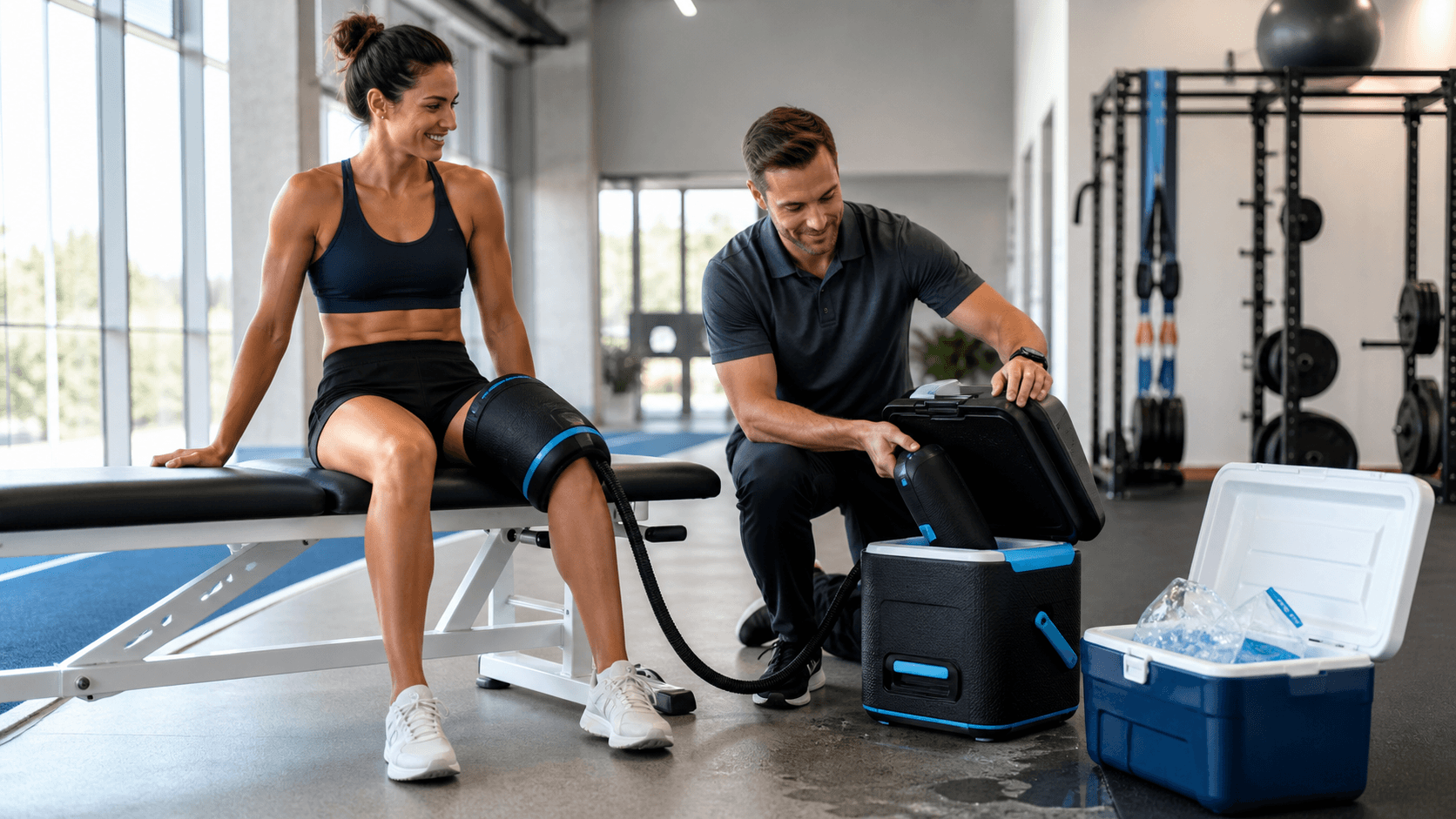
During hot summer months and heavy preseason blocks, cold plus compression can also help manage repeated joint stress from back-to-back practices. Systems similar to what we build at ORX Healthcare are designed to keep the cold level stable instead of letting it drift warmer or colder than planned. That kind of control can support the treatment plans set by clinicians and athletic trainers when schedules are busy and athletes need steady care.
Heat and Mobility for Subacute and Chronic Phases
After the first few days, the body moves toward the subacute phase. Swelling is calming down, and the focus starts to shift toward getting motion back, rebuilding strength, and helping the athlete move with more confidence. Weeks later, ongoing tightness or recurring pain tends to fall into the chronic phase.
Heat therapy becomes more helpful when:
- Muscles and tendons feel stiff, like hamstrings, calves, or hip flexors before a rehab or stretching session
- Joints feel achy or stiff, such as knees, shoulders, or the low back, and gentle warmth makes movement easier
- Training happens in cooler gyms or arenas and the body needs a little help warming up before hard work
In these phases, heat is usually not the main event. It is more like a smart warm-up tool. The real progress still comes from:
- Guided mobility work
- Strength and stability training
- Sport-specific drills that challenge the body in a safe way
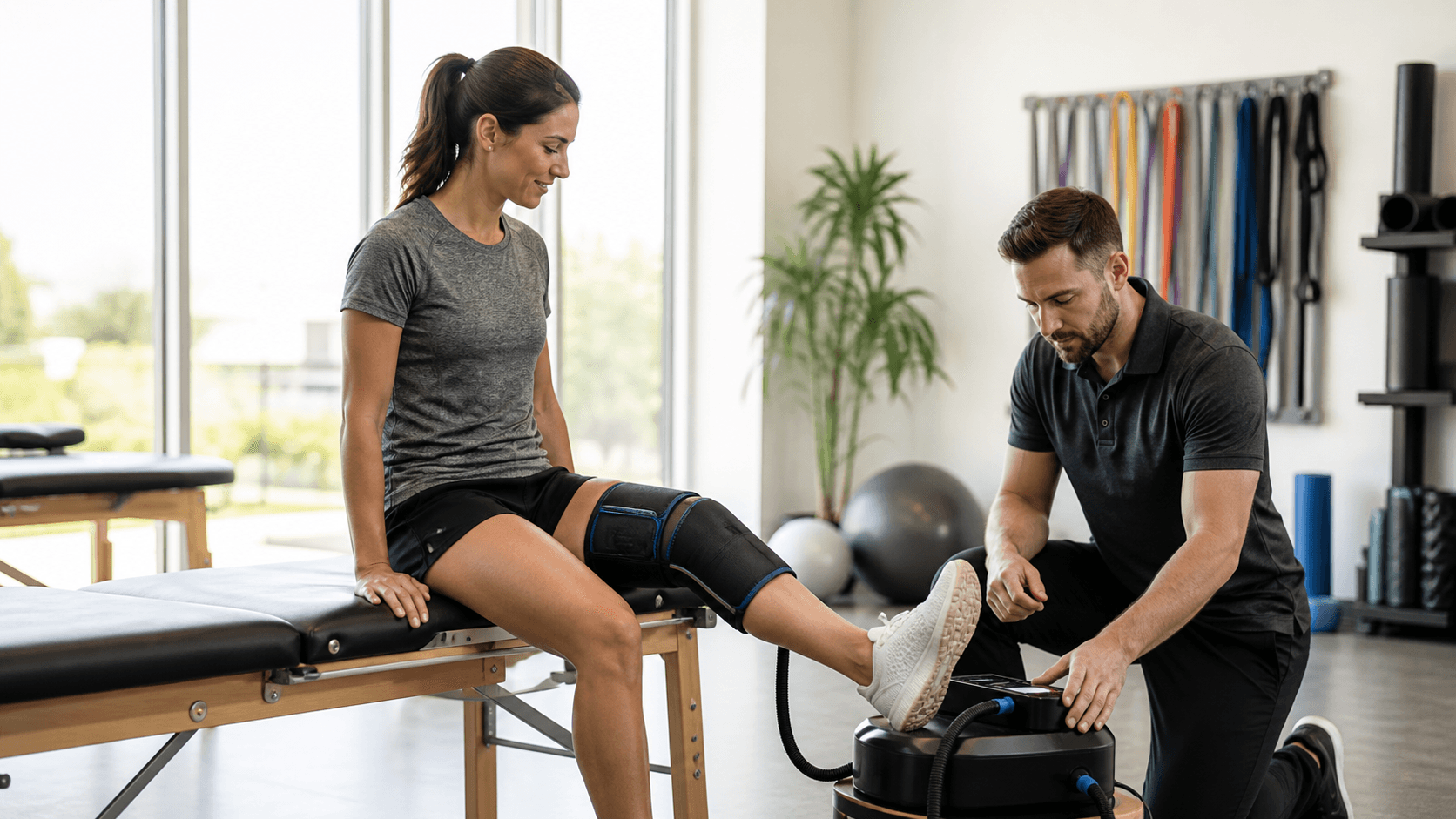
Integrated heat and compression devices can deliver steady, targeted warmth to the exact joint or muscle group that needs it. Once the tissue is more comfortable and ready, the athlete can step right into their program for mobility or strength, instead of spending extra time trying to feel loose.
Using Contrast Therapy for High-Load Training and Return to Play
Contrast therapy sits in a different lane than pure cold or pure heat. It is usually not the first choice after a brand-new injury. Instead, it tends to shine when the athlete is already training hard.
Good use cases for contrast include:
- In-season athletes with several games packed into a short time who need their legs or upper body to feel ready quickly
- High-volume camps, tournaments, or conditioning blocks where soreness and heaviness build up but there is no clear acute injury
- Late-stage rehab or return-to-play, when the athlete is doing intense work but still feels some leftover swelling or fatigue
Typical contrast plans cycle between:
- A warm setting that feels comfortably hot but not painful
- A cool setting that feels cold but not numbing
- Set time blocks for each, repeated in a consistent pattern
The idea is to create controlled changes in vessel size to support circulation and help the body clear byproducts from heavy training. Many athletes, especially in running and jumping sports like soccer, basketball, and football, use lower-body contrast as part of their routine to feel more fresh.
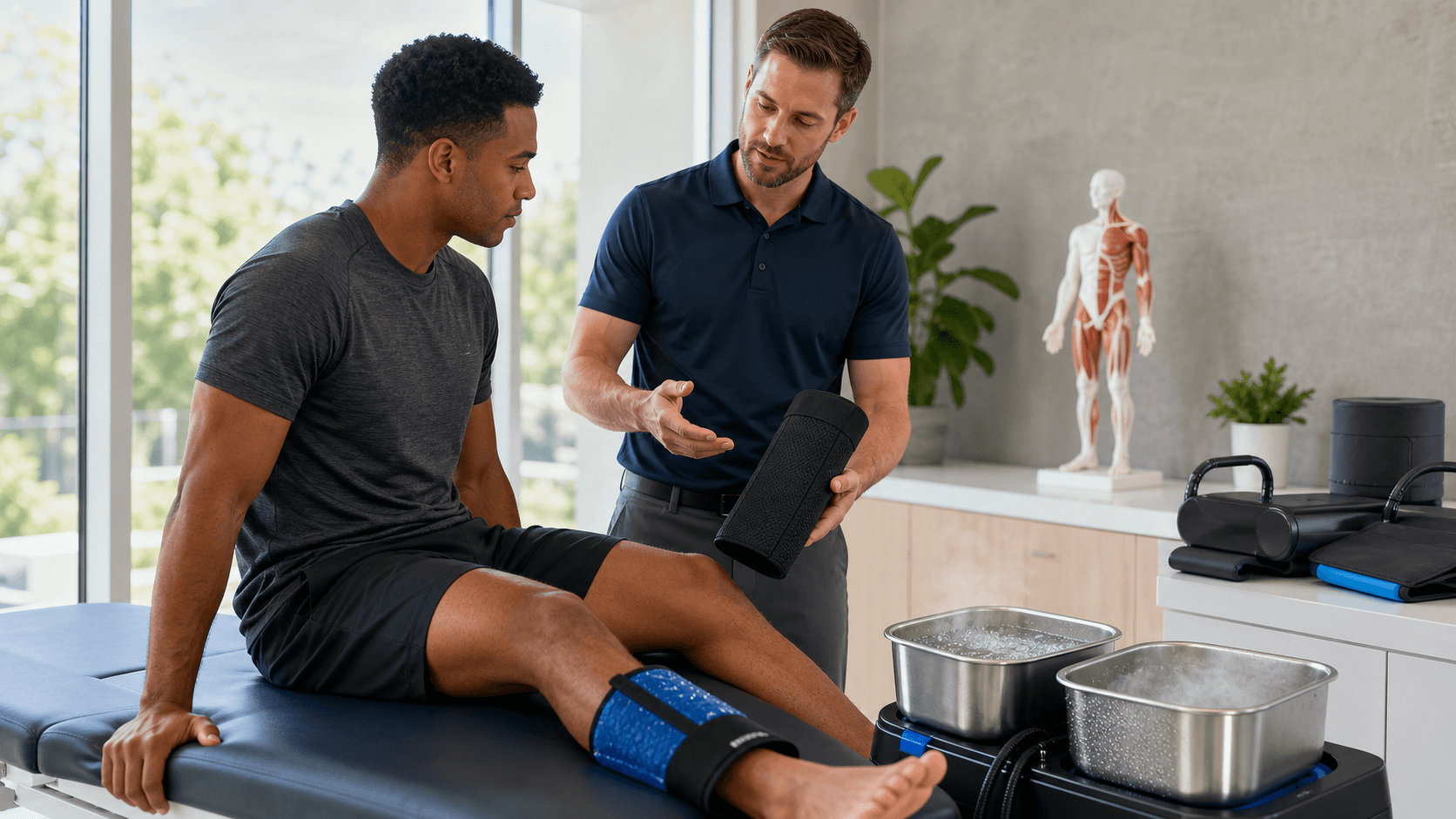
Advanced sports medicine recovery devices can make contrast easier to manage, since temperature and timing can be pre-set. That allows athletic trainers and clinicians to standardize protocols for whole teams, instead of guessing with tubs, buckets, or showers.
Building a Smart Temperature Therapy Game Plan
A simple way to think about matching the therapy to the moment is this:
- Acute pain and visible swelling after injury or surgery: cold and compression are usually the priority, guided by a medical professional
- Stiffness and limited motion in later phases: gentle heat before mobility and strengthening can support more effective sessions
- Heavy legs and fatigue during dense training or competition: contrast may be a helpful option when cleared by a clinician or athletic trainer
Athletes and at-home users should always follow the specific plan given by their sports medicine team. The job of the devices is to support that plan, not replace it. With advanced sports medicine recovery devices like those we design at ORX Healthcare, clinicians can individualize temperature levels, compression, and treatment timing so each athlete gets what they need at that exact stage.
As training seasons roll on and workloads shift with weather and competition, it pays to step back and review current recovery routines. Matching cold, heat, and contrast to the right injury type and phase, and pairing that with precise, consistent delivery, can help protect hard-earned performance while supporting safer, more confident returns to play.
Accelerate Your Recovery With Proven Sports Medicine Technology
If you are ready to shorten downtime and support smarter training, explore our curated line of sports medicine recovery devices designed to meet the demands of serious athletes. At ORX Healthcare, we prioritize evidence-based tools that can be integrated into your daily routine without complicating your schedule. If you have questions about which solutions fit your specific goals, contact us so we can help you build a tailored recovery plan.