Sports move fast, and rehab has to keep up. When athletes are pushing harder, playing longer, and jumping from school seasons to club and summer leagues, simple rest and a bag of ice often are not enough to keep the body ready.
Compression wraps for injury recovery give us a smarter way to support healing between the clinic, the training room, and home. In this article, we will walk through how compression works, how it fits into modern rehab, and how newer systems can help athletes get back to doing what they love with more confidence.
Elevating Rehab Outcomes with Smart Compression
Sports are quicker, contact is higher, and the calendar barely slows down. When the pace rises, recovery has to become more thoughtful, not just longer.
Compression wraps today cover a wide range, from basic elastic bandages to advanced, portable devices that can deliver set levels of pressure and pair compression with cold or heat. These systems give athletes and medical teams more control, which is especially helpful when trying to balance fast healing with smart return-to-play plans.
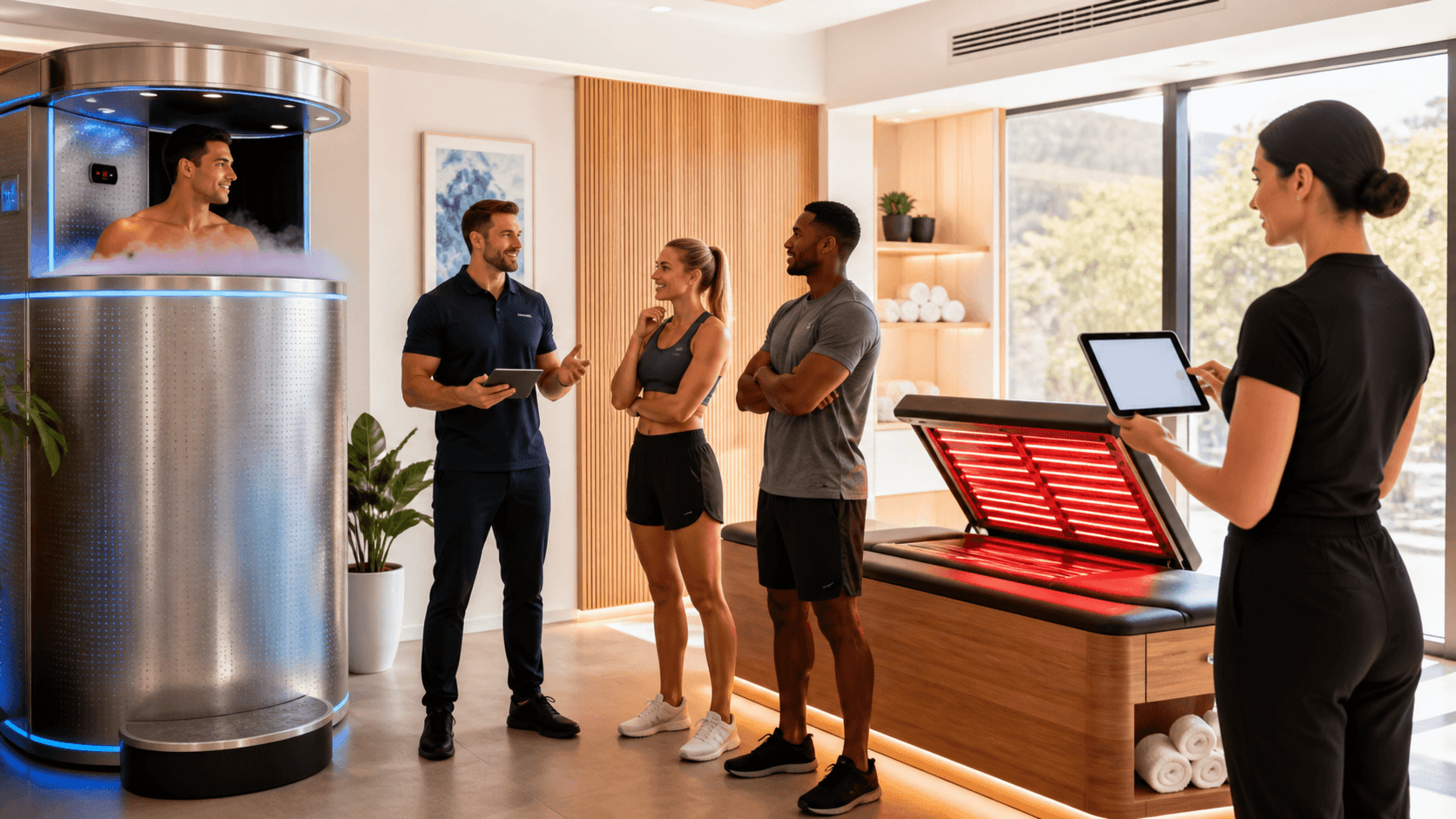
We see compression as a bridge between clinical care and real-world performance. What used to live only in a rehab clinic is now moving into training rooms, buses, hotel rooms, and living rooms. That matters a lot as late June and summer preseason ramps up, bringing more practices, more tournaments, and, sadly, more sprains, strains, and overuse aches.
When recovery is planned as carefully as training, athletes are less likely to miss big weeks of practice or key events because an injury was managed with guesswork instead of structure.
How Compression Wraps Support the Healing Process
To understand why compression helps, it is useful to think about fluid. After an injury, the body rushes blood and other fluids to the area. This is part of healing, but too much swelling can increase pain and slow things down.
Graduated external pressure from compression wraps can:
- Support venous return, helping blood move back toward the heart
- Support lymphatic flow, which helps clear built-up fluid
- Limit extra swelling in the early hours after an injury
- Help some athletes feel more supported and stable
Healing usually moves through three broad stages: the acute phase right after injury, the subacute phase as pain and swelling start to settle, and the return-to-play phase where we add more loading and sport-specific work. Compression should not look the same in all three.
For example:
- Acute phase: Short, more frequent compression sessions, usually with colder temperatures if approved by a medical professional
- Subacute phase: Longer sessions with controlled pressure, still watching for swelling and comfort
- Return-to-play: Compression after hard practices or lifts to support recovery
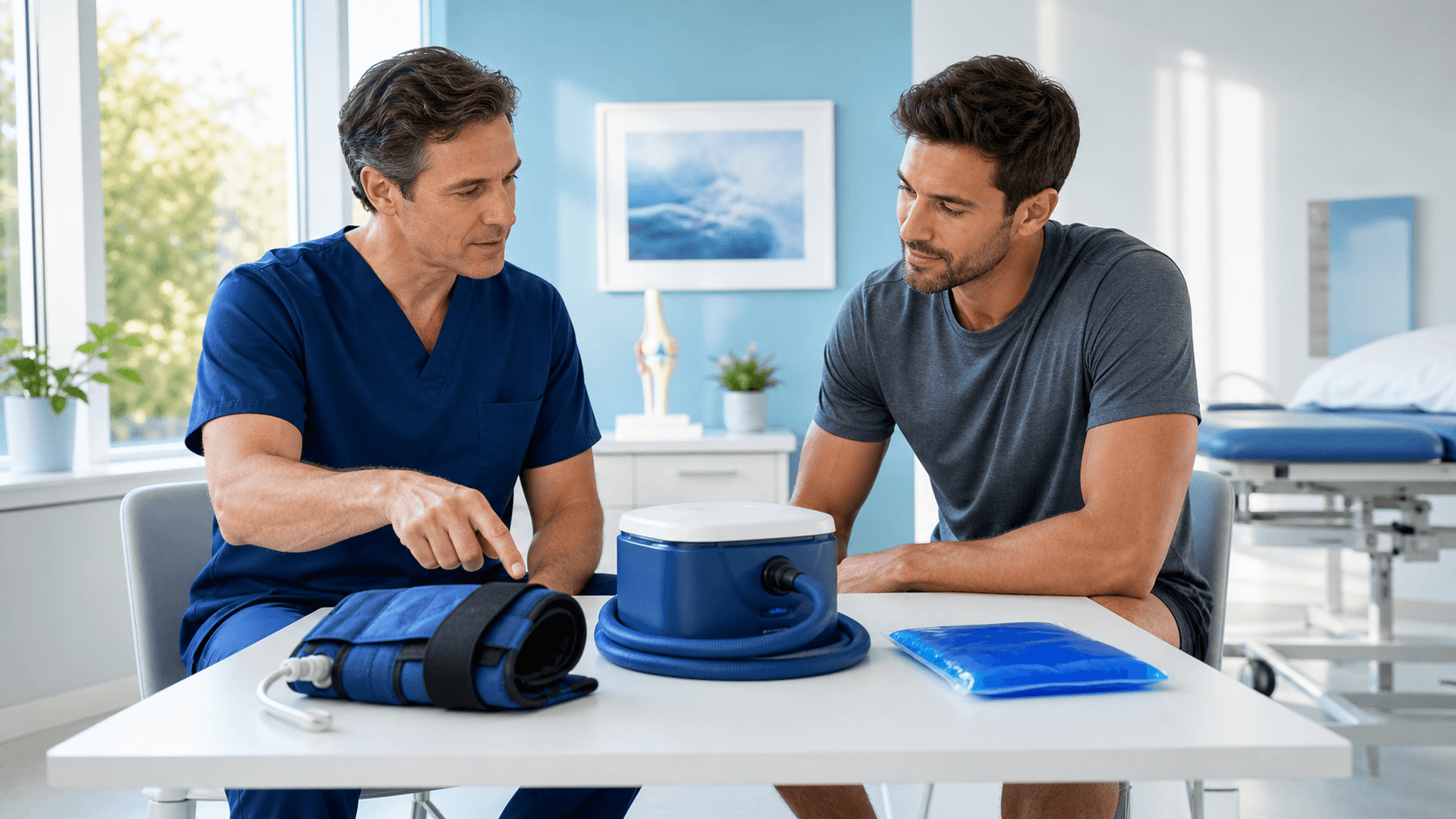
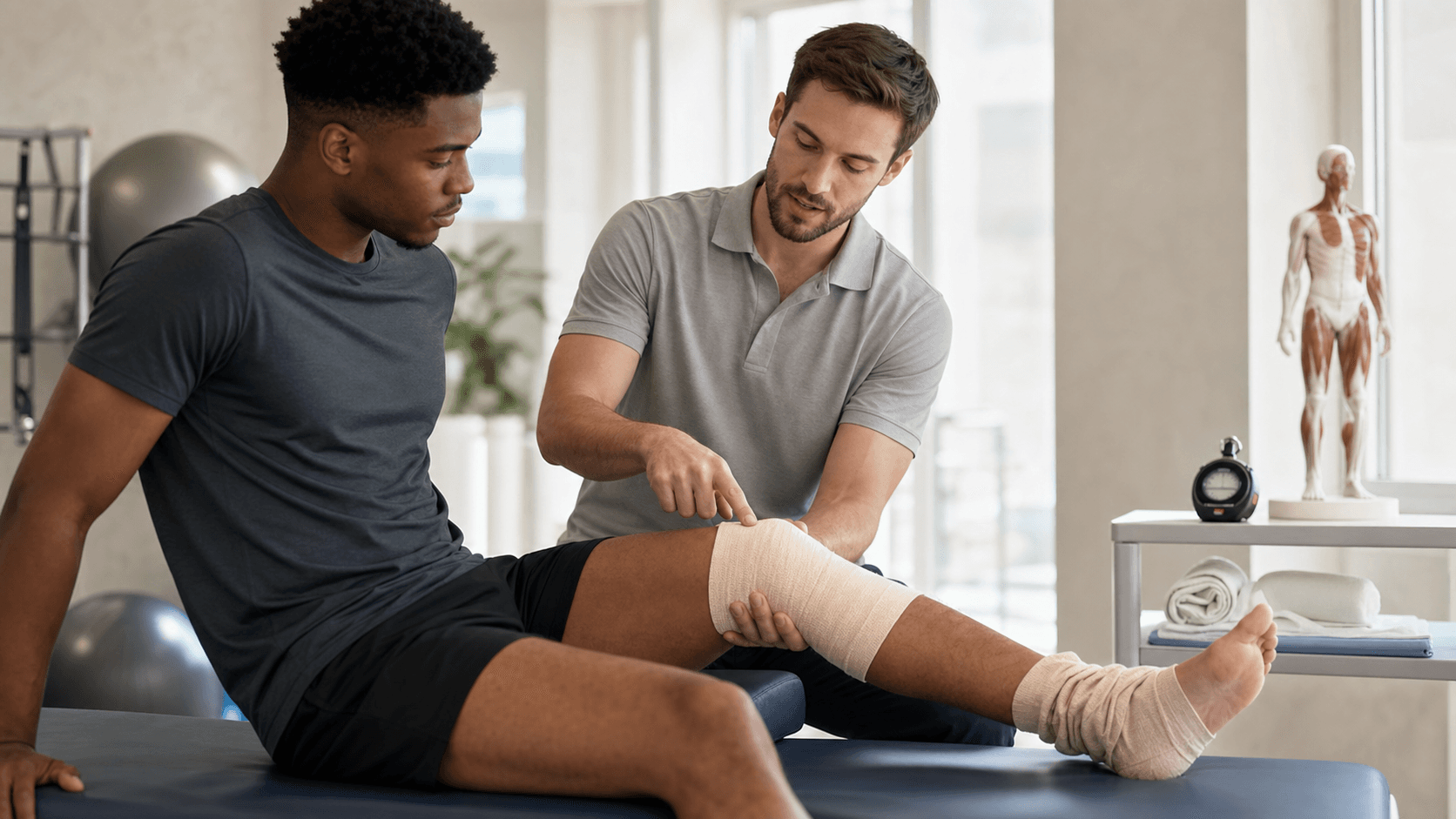
Traditional elastic bandages can help, but they often lose tension, and it is hard to know how much pressure you are really applying. Modern compression systems can deliver more consistent, measurable pressure and can be paired with cold or heat to support joints and soft tissue in a more targeted way.
Building Compression Into a Modern Rehab Protocol
So where does compression actually fit during a typical rehab week? Let us look at a few common injuries.
For a mild ankle sprain:
- First days: Compression with cold in short blocks, as guided by a clinician, plus rest and gentle movement
- Mid-phase: Compression after mobility work and light strength exercises
- Later phase: Compression after sport drills and conditioning
For a hamstring strain:
- Early on: Controlled compression to help manage swelling and discomfort
- Middle: Compression after stretching and light loading
- Return phase: Post-practice sessions to help manage soreness
For knee overuse:
- During quiet flare-ups: Compression to support the joint after movement sessions
- During heavier weeks: Regular compression after practices and lifts as part of a planned routine
Dosing matters. Session length, frequency, and pressure level should always be set with sports medicine professionals who understand the athlete's history, age, sport, and current training phase.
When compression is paired with temperature therapy, timing is key:
- Cold is often used early for swelling and pain, when approved by a clinician
- Heat is often used later for stiffness and mobility work
- Some athletes may use both at different times of day, based on how their body responds
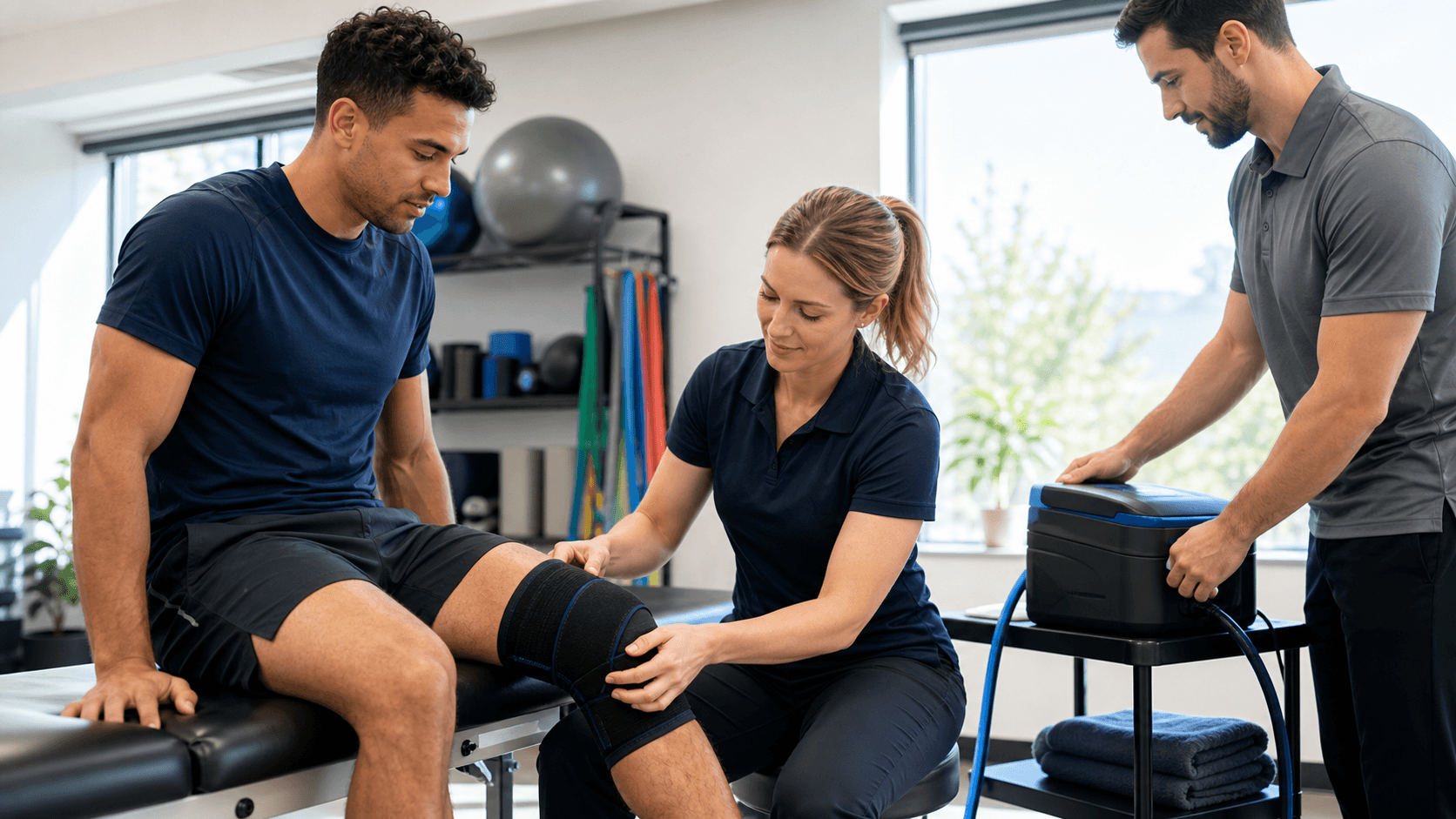
Portable systems make it easier to keep this pattern steady, whether the athlete is at school, at home, or traveling for summer tournaments.
From Clinic to Home: Making Compression User-Friendly
Rehab is no longer something that happens only on a table in a clinic. Athletes, parents, and coaches are now part of the process, especially during busy summer and preseason weeks when schedules are packed and travel is common.
For compression wraps for injury recovery to actually be used, they need to be friendly, not frustrating. Helpful features include:
- A fit that is easy to repeat without guesswork
- Clear guidance about pressure and session time
- Comfort during longer wear, even in warm weather
- Batteries or power options that work on the road
Education is just as important as hardware. Clinicians and athletic trainers can help athletes learn how to:
- Place wraps correctly and avoid twisting or uneven pressure
- Check skin color and sensation under the wrap
- Watch for red flags like numbness, tingling, sharp pain, or unusual skin changes
- Follow personal limits on pressure and time
When everyone shares the same plan, athletes can safely manage more of their recovery at home while still staying under professional guidance.
Data-Driven Recovery and Performance Integration
Technology is now part of almost all sports. Many athletes track heart rate, distance, speed, and even sleep. Compression and temperature therapy can fit into that data picture too.
By tracking simple details like:
- How often compression is used
- Session length and timing
- Self-reported pain, stiffness, and fatigue before and after sessions
sports medicine teams can spot patterns. For example, they may see that two short compression sessions work better than one longer one after intense practices, or that using compression later in the day helps soreness more than using it early.
Performance-focused systems, like those we build at ORX Healthcare, are designed to support this full path from injury recovery to high-level performance. The same tools that help manage swelling after a sprain can later support recovery after heavy lifts, long runs, or back-to-back games during busy summer and fall stretches.
By keeping recovery tools consistent across the year, athletes can build habits, not just short-term fixes.
Turning Compression Into a Competitive Advantage
Compression wraps for injury recovery should not sit in a corner, used only on bad days. When they are woven into daily and weekly routines, they become one more way to protect training time and performance.
Sports medicine staff, strength coaches, and athletes can start by asking a few simple questions:
- Where do we lose the most practice time to soft-tissue injuries?
- When are athletes most sore or stiff during the week?
- Do we have a clear plan for compression around key training blocks?
From there, the next step is to work with medical professionals to pick devices that match the level of play, travel demands, and rehab needs. Simple daily habits can follow, like a short compression session after evening practice, or scheduled use during preseason weeks when workloads climb.
At ORX Healthcare, our focus is on making compression and temperature therapy systems that feel natural in both clinical and athletic settings so that recovery supports performance, not just pain relief. When compression becomes a steady part of smart rehab and training, athletes have a better chance to come back stronger, stay on the field, and keep building the careers they care about.
Support Your Recovery With Targeted Compression Solutions
If you are ready to take a more proactive approach to healing, explore our specialized compression wraps for injury recovery designed to support comfort and mobility. At ORX Healthcare, we focus on practical tools that can fit into your daily routine while you recover. Our team is available to answer questions and help you choose the right option for your needs, so feel free to contact us for personalized guidance.