How Advanced Cryotherapy Can Elevate Your Clinic This Summer
Professional cryotherapy equipment is no longer just for elite training rooms. Many clinics now see it as a smart way to support safer, more comfortable recovery for active patients. If your staff spends a lot of time filling ice bags, adjusting wraps, and checking skin, you might be wondering if it is time for an upgrade.
Summer often makes that question louder. Warm weather, longer days, and more outdoor sports mean more sprains, sore joints, and post-surgical rehab. Clinics and athletic programs look for recovery tools that are safe, repeatable, and simple to run. When cold therapy is done well, it can support better comfort, smoother rehab plans, and stronger trust between your team and your patients.
This is where advanced systems stand out. Professional units can support both clinical rehab and athletic performance work, so one piece of gear can serve a wide range of needs. At ORX Healthcare, we focus on temperature-therapy and compression technology that supports precise, repeatable care in medical and sports environments, from the training room to the home.
Understanding Modern Professional Cryotherapy Equipment
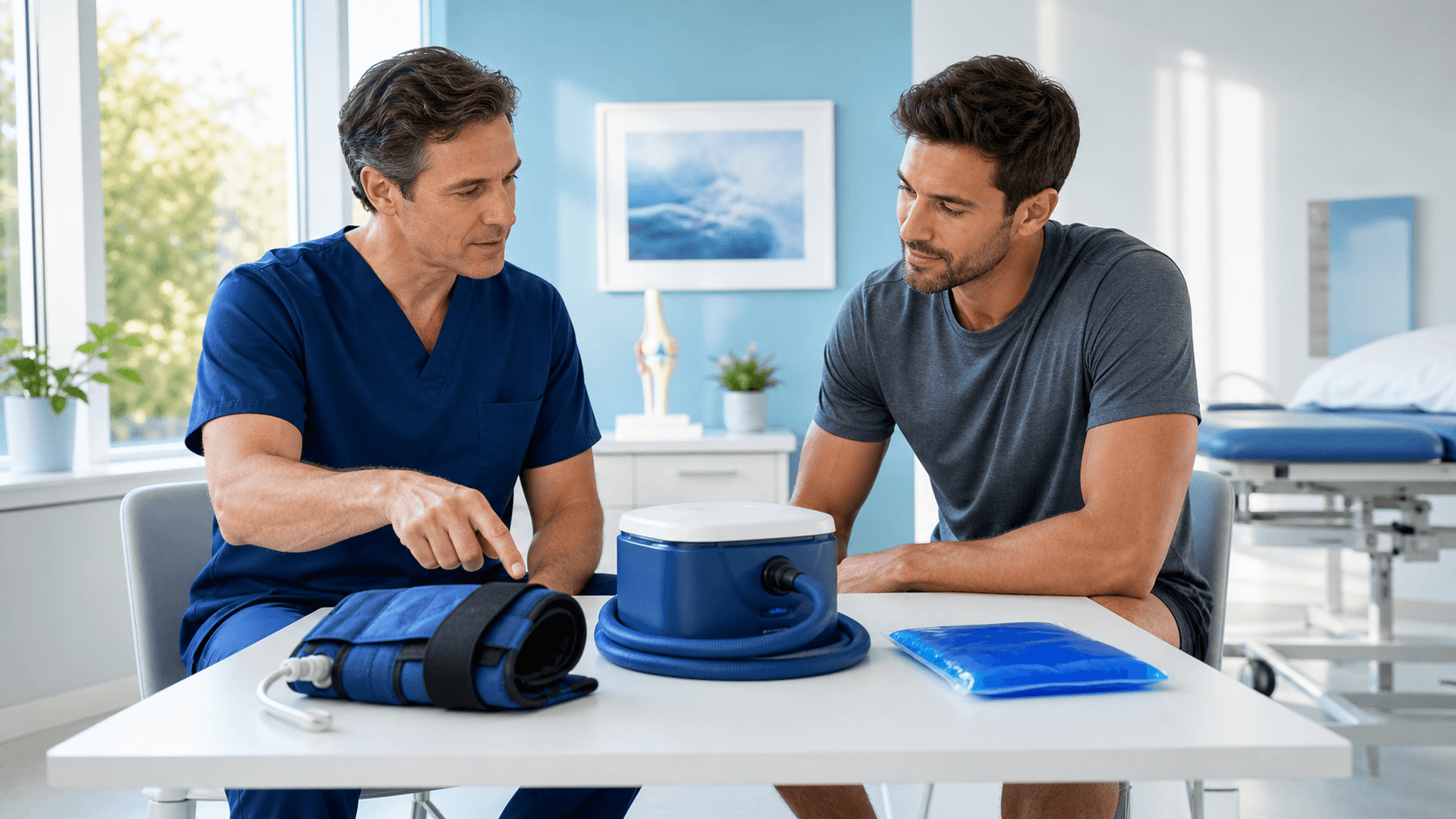
For many people, cold therapy still means a plastic bag of ice and a towel. Professional cryotherapy equipment is very different. These devices are designed to deliver controlled cold over a set time, often with compression included, so your team is not guessing about how cold is too cold or how long is too long.
Modern systems can offer:
- Controlled temperature ranges instead of random ice melt
- Automated timing and cycles instead of a mix of alarms and sticky notes
- Optional compression to support comfort and stability
- Pads or wraps for different body areas
Clinically, cold therapy is often used to help:
- Manage pain after injury or surgery
- Limit swelling in the early phases of rehab
- Support active patients and athletes so they can follow a safe recovery plan
The key difference from a simple ice pack is control. Whole-limb systems can surround a knee, shoulder, or ankle with consistent cooling and compression. Localized systems can target smaller areas. Many medical-grade devices allow your team to program sessions, save standard protocols, and rely on safety features that reduce risk compared to homemade icing solutions.
When you pair temperature-therapy with compression in a single device, you can give patients a clear, guided experience instead of a loose bag that slips around and warms up too fast.
Clinical and Business Benefits Your Team Will Notice
When cold therapy is more predictable, your outcomes can feel more predictable too. Patients are often more relaxed when they feel steady, comfortable cooling instead of sharp, uneven cold spots from loose ice. That comfort can support better follow-through with recovery plans and can help build trust in your clinic.
Some benefits teams often notice include:
- More consistent treatment sessions from patient to patient
- Less fuss with towels, straps, and ice bag changes
- Clearer protocols for new staff members
For clinicians and athletic trainers, workflow matters. Hands-off cycles and standard settings mean your staff can start a session, document it, and then focus on exercises, education, or the next patient. Less time chasing ice refills can mean more time on skilled care.
There is also a business side. When you offer professional cryotherapy equipment as part of a recovery pathway, you can:
- Build higher-value treatment plans for sports and orthopedic cases
- Create recovery options that appeal to athletes and active adults
- Show that your clinic invests in performance-focused care, not just the basics
This can support both patient satisfaction and your reputation in the local sports community, especially in areas where summer activity and outdoor training are a big part of daily life.
How to Evaluate Cryotherapy Systems for Your Practice
Choosing a system starts with your patient mix. A busy orthopedic or sports medicine clinic will not always have the same needs as a smaller physical therapy space or a post-op recovery center. Think carefully about who you serve most often and what their care looks like day to day.
Questions to consider:
- Do you treat more knees, shoulders, or ankles, or do you need flexible coverage for many joints?
- Do your patients stay in the clinic for longer sessions or shorter visits?
- Do you work with teams or groups that might benefit from multiple setups at once?
Safety and usability are just as important as features. Look for medical-grade temperature control with clear limits, automatic shutoff options, and easy-to-read screens. The interface should feel simple enough that new staff members or supervised patients can learn it without confusion. Training and clear guides are key so your team uses the same settings every time.
You will also want to think about how the system fits into your larger setup. Consider:
- How easy the pads and wraps are to clean
- How the device fits into your current rehab flow and documentation habits
- Whether the system can grow with you, for example by adding more pads or units as your clinic or training program expands
When you find a system that works with your current space and can scale with your plans, it becomes a long-term part of your care model, not just another gadget.
Is Professional Cryotherapy Equipment Worth the Investment?
The big question for many clinics is simple: is this worth it compared to basic cold packs? While every practice is different, it helps to look at both the direct and indirect impact.
On the direct side, think about how often you would actually use a professional system. Orthopedic, sports medicine, and post-surgical patients are common users, and many clinics see steady demand all year, with summer bringing extra volume from sports and outdoor activity. Growing awareness of athletic-style recovery can also draw in active adults who value structured, professional care.
You can also compare advanced systems to traditional cold therapy in terms of:
- Staff time saved from less manual icing and cleanup
- Fewer treatment variations, since standard settings are easy to repeat
- Patient preference for a clean, comfortable, professional setup instead of loose ice
Over time, many clinics build professional cryotherapy into higher-level recovery packages or post-op plans. When the system supports your existing services instead of standing on its own, the return can feel less like a question and more like a natural step in advancing your care standards.
Bringing Advanced Cryotherapy to Life in Your Clinic
If you are wondering whether to move forward, start with a simple audit. Look at your monthly patient volume, your most common injuries and surgeries, and how often your team relies on basic cold packs today. Note where things break down: staff chasing ice, patients complaining about inconsistent cooling, or trainers trying to cover large areas with small packs.
From there, you can map out how a professional system might fill those gaps. Plan how you would:
- Add clear cryotherapy steps into existing rehab protocols
- Train staff on standard settings for common surgeries and injuries
- Explain the new equipment to patients so they know what to expect
Communication matters too. When you bring in advanced cryotherapy, your community should know about it. Simple education in your waiting room, clear information in your patient handouts, and updates shared with local sports organizations can help people understand that you offer performance-focused recovery, not just basic ice.
As a performance-driven medical technology company, we at ORX Healthcare focus on temperature-therapy and compression systems that aim to support both clinical precision and athletic needs. Working with a partner that understands both sides of this world can help you choose equipment, set up protocols, and support your team so that professional cryotherapy equipment becomes a natural, trusted part of your everyday care.
Equip Your Facility With Trusted Cryotherapy Technology
Elevate your patient care and streamline treatments with our advanced professional cryotherapy equipment designed for reliable performance in demanding clinical environments. At ORX Healthcare, we partner with you to identify the right systems for your practice, from capacity needs to safety features and workflow integration. If you have questions about specifications, pricing, or implementation, simply contact us so we can help you move forward with confidence.